Making restaurant-style pizza at home may seem difficult, especially when you compare homemade pizza with the crispy crust, melted cheese, and balanced toppings served at a restaurant. However, you do not need a professional kitchen to make a good pizza. With the right dough, ingredients, oven temperature, and preparation method, you can make a pizza at home that has a restaurant-style texture and flavor.
The most important part of homemade pizza is understanding how each step affects the final result. A good pizza starts with properly prepared dough. The sauce should be flavorful but not too wet, toppings should be balanced, and the oven should be properly heated before baking.
This guide explains how to make restaurant-style pizza at home, including dough preparation, sauce, toppings, baking, and serving.
What Makes Restaurant-Style Pizza Different?
Restaurant-style pizza usually has a few important characteristics.
The crust is often crisp on the outside while remaining soft and chewy inside. The sauce has enough flavor without overpowering the cheese and toppings. The cheese melts evenly, and the toppings are distributed across the pizza instead of being piled in one area.
Another important factor is high heat. Many professional pizza ovens reach temperatures much higher than a standard home oven. This allows pizza to cook quickly while developing a browned crust.
Although most home ovens cannot reach the same temperature, you can still improve the result by using the highest suitable temperature and preheating the oven properly.
Ingredients for Restaurant-Style Pizza
For one large pizza, you will need:
For the Dough
- 3 cups all-purpose or bread flour
- 1 teaspoon salt
- 1 teaspoon sugar
- 2 teaspoons instant yeast
- 1 tablespoon olive oil
- About 1 cup warm water
For the Sauce
- 1 cup tomato puree
- 1 tablespoon olive oil
- 1 garlic clove, finely minced
- 1/2 teaspoon dried oregano
- 1/2 teaspoon black pepper
- 1/2 teaspoon salt
- 1/2 teaspoon sugar, optional
For the Toppings
- 1 1/2 to 2 cups shredded mozzarella cheese
- Cooked chicken, pepperoni, or another preferred protein
- Sliced bell peppers
- Sliced onions
- Mushrooms
- Black olives
- Fresh basil or dried herbs
- A small amount of olive oil
You do not need to use all of these toppings. Choose a few ingredients that complement each other.
Step 1: Prepare the Dough
Start with the dough because it needs time to rest and rise.
Add warm water to a mixing bowl. Mix in the sugar and yeast. Allow it to sit for a few minutes.
Add flour and salt, then begin mixing. Add olive oil and continue mixing until a dough forms.
Transfer the dough to a lightly floured surface and knead it for approximately eight to ten minutes.
The dough should become smooth and elastic.
If it is extremely sticky, add a small amount of flour. Avoid adding too much flour because a stiff dough can produce a hard crust.
Place the dough in a lightly oiled bowl and cover it.
Leave it in a warm place for about one hour or until it has increased in size.
Step 2: Allow the Dough to Rest Properly
Resting the dough is an important part of making restaurant-style pizza.
When dough rests, the yeast has time to work and the gluten becomes easier to handle.
For a more developed flavor, you can prepare the dough in advance and allow it to rest in the refrigerator for several hours or overnight.
Cold fermentation can help develop flavor and texture, although it requires more planning.
If you use refrigerated dough, allow it to come closer to room temperature before shaping.
Step 3: Make the Pizza Sauce
Restaurant-style pizza usually uses a relatively simple sauce.
Heat olive oil in a small saucepan. Add minced garlic and cook briefly without allowing it to burn.
Add tomato puree, oregano, black pepper, salt, and optional sugar.
Simmer the sauce for approximately 10 minutes.
The sauce should be thick enough to spread easily without running across the dough.
Allow it to cool before using.
You can also use a simple uncooked tomato sauce if you prefer a fresher tomato flavor.
Step 4: Prepare the Toppings
Prepare your toppings before shaping the dough.
If you are using chicken, cook it completely before adding it to the pizza.
Slice vegetables thinly so they cook quickly.
Drain ingredients such as olives, corn, and canned vegetables.
If using mushrooms, you can lightly cook them first to remove some moisture.
Preparation is important because pizza usually spends only a short amount of time in the oven.
Step 5: Preheat the Oven
One of the biggest mistakes people make when preparing pizza at home is not preheating the oven long enough.
Set your oven to its highest suitable pizza-baking temperature, commonly around 240°C to 250°C or 465°F to 480°F, depending on the oven.
Allow it to preheat for at least 20 to 30 minutes.
If you have a pizza stone or pizza steel, place it in the oven while it preheats.
A hot baking surface helps the bottom of the pizza cook quickly and become crisp.
Step 6: Shape the Dough
Once the dough has risen, gently press it down.
Place it on a lightly floured surface.
Instead of aggressively pressing the entire dough flat, gently stretch it from the center toward the edges.
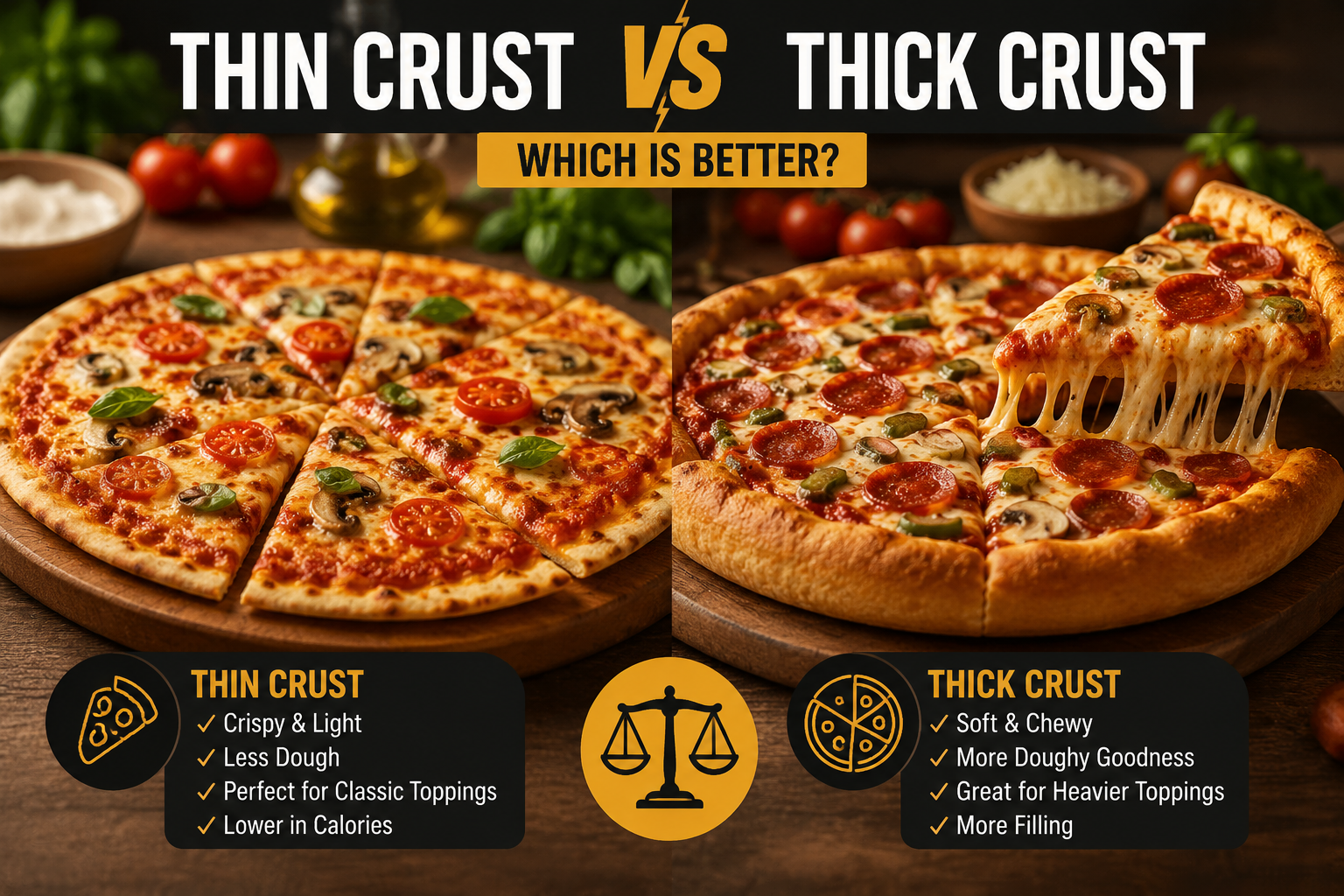
Leave a slightly thicker border around the outside if you want a raised crust.
Avoid using excessive flour because it can make the finished crust dry.
If the dough keeps shrinking back while you shape it, allow it to rest for another five to ten minutes before trying again.
Step 7: Add the Sauce
Spread a thin layer of pizza sauce across the dough.
Use the back of a spoon to spread it evenly.
Leave a small border around the edges.
Do not use too much sauce. A thick sauce layer can make the center of the pizza wet and prevent the crust from becoming crisp.
A balanced amount of sauce allows the cheese and toppings to remain noticeable.
Step 8: Add the Cheese
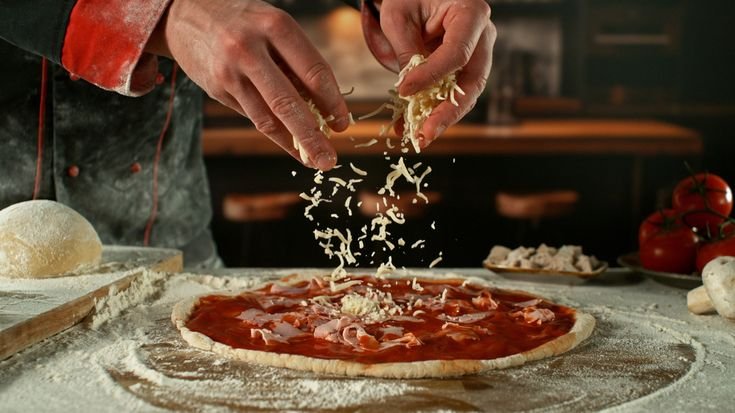
Sprinkle mozzarella evenly over the sauce.
Freshly shredded mozzarella usually melts well.
You can combine mozzarella with a small amount of parmesan or cheddar for additional flavor.
Avoid covering the pizza with an extremely thick layer of cheese.
Too much cheese can release oil and moisture, which may affect the crust.
Step 9: Add the Toppings
Add your prepared toppings evenly.
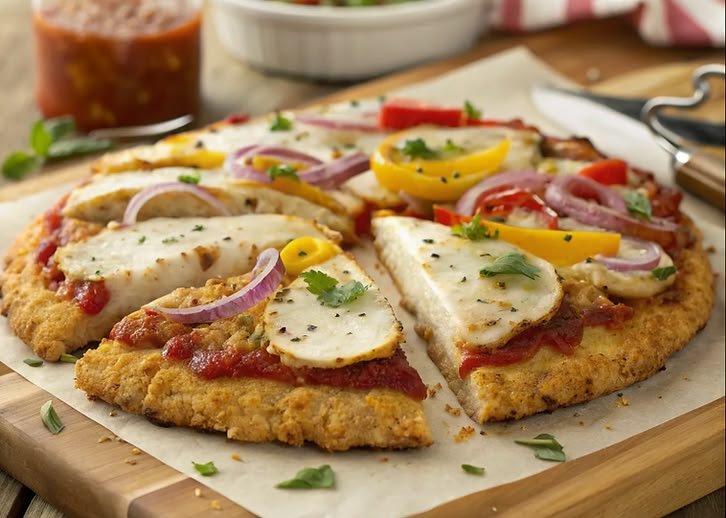
For a restaurant-style chicken pizza, you could use:
- Cooked chicken
- Bell peppers
- Onions
- Mushrooms
- Mozzarella
- Oregano
For a classic pepperoni pizza, use pepperoni, mozzarella, tomato sauce, and oregano.
For a vegetarian pizza, use mushrooms, bell peppers, onions, tomatoes, olives, and mozzarella.
Keep the toppings balanced. A pizza with too many toppings can become difficult to bake properly.
Step 10: Transfer the Pizza to the Oven
If using a pizza stone or steel, transfer the prepared pizza onto the hot surface.
A pizza peel can make this easier.
If you do not have a pizza peel, prepare the pizza on parchment paper or a baking tray.
Work quickly because the dough can become difficult to move if it sits with sauce and toppings for too long.
Place the pizza in the hottest part of the oven.
Step 11: Bake the Pizza
Bake the pizza at high heat until the crust becomes golden and the cheese melts.
Depending on your oven temperature, crust thickness, and baking surface, this can take approximately 7 to 15 minutes.
Watch the pizza carefully toward the end of the cooking process.
The edges should be browned, the cheese should be melted, and the bottom should be properly cooked.
If your oven has a broiler or grill function, you can use it briefly at the end to brown the cheese. Stay near the oven because the pizza can burn quickly.
How to Get a Crispy Pizza Base
A crispy base requires high heat and controlled moisture.
First, make sure the oven is fully preheated.
Second, avoid adding too much sauce.
Third, drain wet toppings before using them.
Fourth, use a hot pizza stone, steel, or baking tray if available.
Finally, avoid making the dough excessively thick.
These simple steps can improve the bottom texture of homemade pizza.
How to Get a Soft and Chewy Crust
If you prefer a restaurant-style chewy crust, do not overwork the dough with excessive flour.
Allow it to rise properly.
Use enough water to create a flexible dough.
High-temperature baking can also help produce a crust that is crisp on the outside while remaining softer inside.
Leaving a slightly thicker edge can create a pleasant chewy crust.
The Importance of Cheese
Cheese plays an important role in restaurant-style pizza.
Mozzarella is a popular choice because it melts well and has a mild flavor.
You can experiment with different combinations.
Mozzarella provides the main cheese layer, parmesan adds stronger flavor, and cheddar can provide a sharper taste.
Use cheese in moderation. The goal is to create a balanced pizza rather than cover the entire crust with a thick layer.
Choosing the Right Toppings
Restaurant-style pizza usually does not need a large number of toppings.
Instead, select ingredients that complement each other.
For example:
Chicken and Vegetable: Chicken, mozzarella, mushrooms, onions, and bell peppers.
Spicy Chicken: Chicken, mozzarella, jalapeños, onions, and chili flakes.
Classic: Mozzarella, tomato sauce, and oregano.
Vegetarian: Mushrooms, olives, onions, bell peppers, and tomatoes.
Barbecue Chicken: Chicken, barbecue sauce, red onion, mozzarella, and a small amount of cheddar.
Simple combinations allow individual ingredients to stand out.
Common Mistakes to Avoid
Adding Too Much Sauce
Excess sauce can make the pizza soggy.
Using Too Many Toppings
A heavily loaded pizza may not cook evenly.
Skipping Oven Preheating
A cold oven can produce a pale and soft crust.
Using Too Much Flour
Excess flour can make the dough dry and tough.
Adding Raw Meat
Raw chicken, beef, or sausage may not cook safely during the short pizza baking period. Cook meat before using it as a topping.
Cutting the Pizza Immediately
Allow the pizza to rest for a few minutes before slicing.
How to Make Pizza Without a Pizza Stone
A pizza stone is helpful but not required.
You can use a heavy baking sheet instead.
Place the baking sheet upside down and preheat it in the oven. When the pizza is ready, carefully transfer it onto the hot surface.
A cast-iron skillet can also be used for certain pizza styles.
The main goal is to provide a hot surface that transfers heat quickly to the dough.
How to Make Restaurant-Style Pizza in a Small Oven
If your oven is small, make a smaller pizza instead of trying to fit an oversized one.
Preheat the oven properly and avoid opening the door repeatedly.
Use fewer toppings and spread them evenly.
A smaller pizza can cook more evenly and develop a better crust.
Serving Restaurant-Style Pizza
Once the pizza is finished, remove it from the oven and let it rest for about three minutes.
Add fresh basil, oregano, parmesan, or a small drizzle of olive oil if desired.
Slice the pizza with a sharp pizza cutter.
Serve it immediately while the cheese is warm and the crust is crisp.
You can serve the pizza with a simple salad, roasted vegetables, soup, or a dipping sauce.
Final Thoughts
Making restaurant-style pizza at home is possible with basic ingredients and the right cooking method. The most important factors are good dough, proper resting time, a flavorful but controlled amount of sauce, balanced toppings, and a properly preheated oven.
You do not need dozens of ingredients to make excellent pizza. A few quality ingredients can produce a better result than an overloaded pizza.
Start with a simple combination such as mozzarella, tomato sauce, chicken, mushrooms, and onions. Once you understand how the dough behaves and how your oven cooks pizza, you can experiment with different crust thicknesses, sauces, cheeses, and toppings.
The key is to focus on heat, balance, and preparation. With practice, homemade pizza can become a regular family meal that offers the flavor and texture you want without requiring a professional pizza kitchen.