Curry Dishes
Introduction
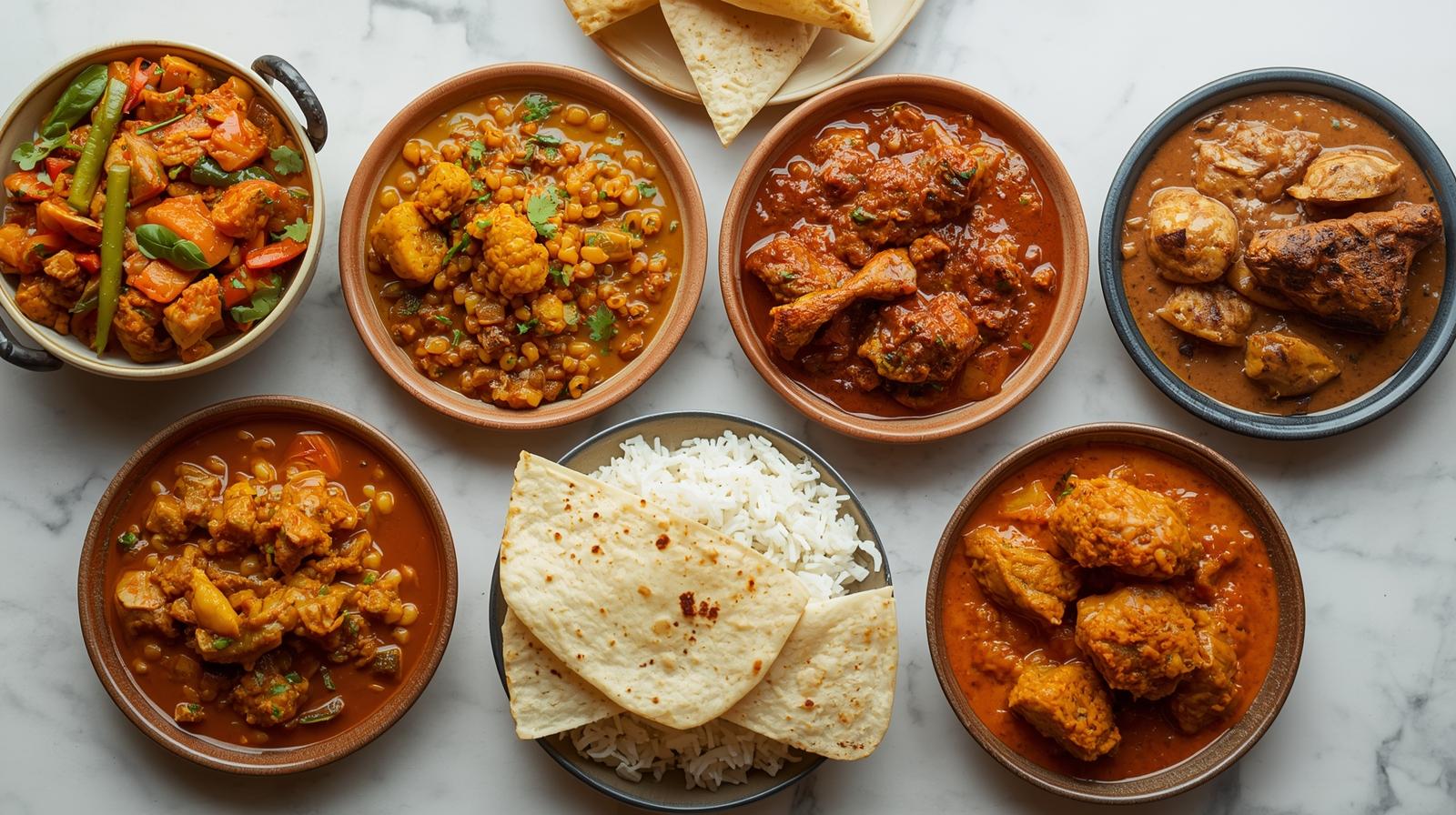
Curry dishes are part of daily meals in many regions. Curry refers to food prepared with a liquid base that carries spices, vegetables, legumes, meat, or seafood. Curry dishes are served with rice, bread, or other sides and fit into regular meal routines. This article explains curry dishes in detail, including types, preparation methods, cultural use, menu planning, and daily consumption. The content is written for readers seeking clear information about curry dishes for food menus, home cooking, and general knowledge.
Meaning of Curry Dishes
Curry dishes are meals prepared using a base of water, stock, or milk combined with spices and main ingredients. The cooking process allows flavors to blend over time.
Curry dishes vary by region but follow a similar structure.
Role of Curry in Daily Meals
Curry dishes are often eaten during lunch or dinner. They are prepared in advance and reheated, which supports meal planning.
Curry supports shared eating and portion control.
Types of Curry Bases
Curry bases differ depending on tradition and availability. Common bases include:
- Water based curry
- Tomato based curry
- Milk based curry
- Yogurt based curry
The base affects texture and pairing options.
Vegetable Curry Dishes
Vegetable curry dishes use vegetables as the main ingredient. Vegetables are cooked until soft and coated with curry sauce.
These dishes are common in home meals.
Lentil Curry Dishes
Lentil curry dishes are prepared using cooked lentils combined with spices. Lentils absorb the curry base during cooking.
These dishes are often served with rice or flatbread.
Meat Curry Dishes
Meat curry dishes use chicken, beef, or other meats. Meat is cooked slowly to allow even heat distribution.
Meat curry dishes are often prepared in larger quantities.
Seafood Curry Dishes
Seafood curry dishes use fish or shellfish. Cooking time is shorter to prevent overcooking.
Seafood curry dishes are common in coastal regions.
One Pot Curry Meals
One pot curry meals combine all ingredients in a single cooking process. This method reduces preparation time.
One pot meals support portion planning.
Curry and Rice Pairing
Curry dishes are often served with rice. Rice absorbs the liquid base and balances the meal.
Different rice types are selected based on curry style.
Curry and Bread Pairing
Flatbreads are often served with curry dishes. Bread is used to scoop curry.
This pairing supports shared dining.
Cooking Methods
Curry dishes are cooked using stovetops, pressure cookers, or slow cooking methods. Each method affects cooking time.
Method choice depends on ingredient type.
Spice Use in Curry
Spices are added during different stages of cooking. Timing affects how flavor spreads through the dish.
Spice balance supports consistency.
Oil and Fat Use
Oil is used to start the cooking process. It helps release spice flavor.
Quantity control supports meal planning.
Preparation Process
Curry preparation often follows steps such as heating oil, adding spices, cooking base ingredients, and simmering main items.
Following steps supports repeatable results.
Curry in Home Cooking
Curry dishes are common in home kitchens. Ingredients are adjusted based on availability.
Home cooking focuses on routine and quantity.
Curry in Restaurant Menus
Curry dishes appear as main items on menus. Menu descriptions often include ingredient type.
Curry supports menu variety.
Portion Control
Portion size matters in curry dishes. Measuring curry helps balance meals.
Portion control reduces waste.
Storage of Curry Dishes
Curry dishes can be stored after cooking. Cooling and refrigeration support food safety.
Reheating should be done evenly.
Curry Dishes for Events
Curry dishes are prepared in large pots for events. Planning includes quantity and serving time.
Event cooking requires coordination.
Cultural Variations
Curry dishes vary across regions. Ingredients, spice choices, and cooking methods differ.
These variations reflect food traditions.
Curry and Daily Routine
Curry dishes fit into daily routines due to flexible preparation. Leftovers may be reused.
This supports time management.
Curry for Beginners
Beginners may start with simple curry recipes. Practice improves understanding of cooking steps.
Simple curries build confidence.
Curry for Large Families
Curry dishes support cooking for families due to scalable portions.
Family meals often include curry.
Cost and Availability
Curry ingredients are widely available. Cost depends on ingredient choice.
This supports regular use.
Curry and Meal Balance
Curry dishes contribute to meal balance when paired with rice, bread, and vegetables.
Combination matters more than single items.
Common Cooking Mistakes
Common mistakes include rushing cooking time or incorrect liquid amounts.
Adjustments improve outcomes.
Menu Planning with Curry Dishes
Curry dishes are placed as main items or daily specials. Planning includes rotation.
Menu balance supports customer choice.
Modern Curry Dishes
Modern curry dishes include fusion styles and updated preparation methods.
Traditional structure remains.
Conclusion
Curry dishes play a major role in daily meals and food menus. Through varied bases, ingredients, and cooking methods, curry continues to support shared meals and routine eating. Understanding preparation, pairing, storage, and portion control helps individuals and food businesses use curry dishes effectively in